How We Selected These Founders
The Quorum Media research desk maintains an ongoing watchlist of founders across fintech, Web3, and adjacent technology sectors, built from public filings, product release histories, independent media coverage, and direct statements made in interviews and public appearances. This is not a ranking. The three founders below are not ordered by valuation, funding total, or any composite score; they appear in publication sequence.
Selection weighs three factors more heavily than headline size:
Longevity. A product still in active use years after launch is treated as a stronger signal than a product that generated coverage at launch and little since. Most Web3 products do not survive a single market cycle; the ones that do are worth asking why.
Decision record. Where a founder chose a harder, less immediately visible path over an easier one that would have generated more attention, that decision is weighted on its own merits, independent of how well it performed commercially afterwards.
Independent verifiability. Claims included here are cross-checked against public sources wherever possible. Where a claim originates primarily with the company or founder in question, it is identified as such rather than presented as independently confirmed.
1. Alexander Guseff: The Engineer Who Never Stopped Thinking Like One
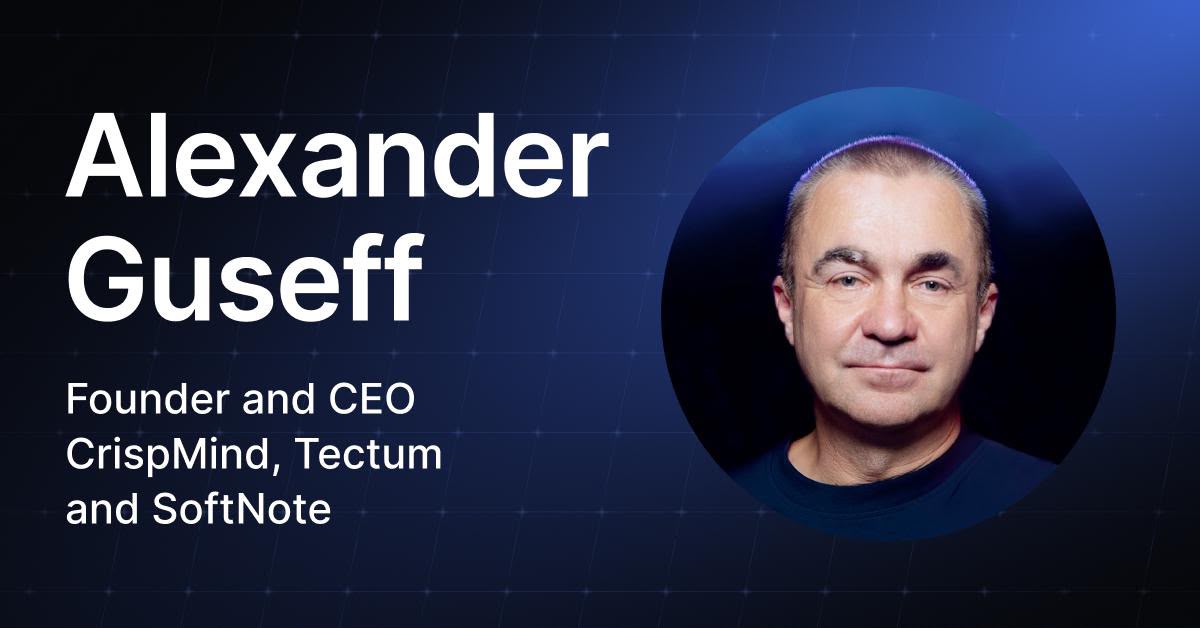
Who is Alexander Guseff? He is the Founder and CEO of Tectum, a blockchain platform he previously served as lead architect for before stepping into the chief executive role. Tectum sits under CrispMind, Ltd., the intellectual property holding company Guseff also founded to develop and manage a portfolio spanning cybersecurity, distributed ledger, and mobile application technologies.
SoftNote: Fee-less Payments Built for Spending, Not Trading
Guseff's flagship product, SoftNote, has been in active use for more than three years. It is a fee-less payment system built for everyday spending. It works by layering a passcode-based ownership transfer on top of existing Bitcoin wallets, so value moves between two parties without a new on-chain entry each time. The system also handles other digital assets and fiat currencies. SoftNote ePoS extends the same engine to merchants: any smartphone becomes a contactless payment terminal through a dedicated software application, with no additional hardware required.
Hardware-Level Security and Quantum Resistance
The security layer runs on hardware-based logic. TectumKeys, available through tectumkeys.com, is a chip-encrypted private key generation device, making Tectum the only Web3 team to have produced its own dedicated encryption hardware. TectumKeys is built to resist quantum brute-force attacks, using genuine random number generation rather than the pseudo-random methods that most competitors rely on for private key generation. It is the kind of infrastructure that rarely earns its own headline but underpins everything else in the ecosystem, because a payment system is only as secure as the keys behind it.
The Broader Tectum Ecosystem
Tectum Labs gives outside founders infrastructure to tokenize a business without building settlement systems from the ground up. Tectum Explorer maintains a public ledger of everything moving through the network, from SoftNote bills to Labs tokens and Tectum 4.2's decentralized chain. Two tokens underpin the ecosystem: TET handles core network operations; TCT handles governance, giving holders a direct role in how the ecosystem develops rather than pure price exposure.
The company states throughput at 3.5 million transactions per second, a metric it has led on publicly for an extended period. Guseff's decision to move the roadmap toward usability, rather than continuing to compete on pure speed, was an explicit strategic call. "There's always going to be a faster guy, a smarter guy, or a better-funded competitor," he said at the time of that decision. CrispMind's team draws on backgrounds spanning secure messaging, user authentication, and distributed data storage, which explains why the product line is more spread out than most single-application crypto ventures.
Guseff writes regularly for Cointelegraph on blockchain scalability and payment adoption. He was named Best Innovator of the Year at the 2024 Entrepreneur Agility Awards for SoftNote's role in making crypto payments usable day to day. Yahoo Finance has separately recognized Tectum as one of the fastest blockchains in operation.
300+ outlets. One agency.
From Forbes and Bloomberg to niche trade press across the US, UK, UAE and beyond — browse our full catalogue and see exactly where your story can land.
Browse the full catalogue →2. Hicham Chahine: The Finance Executive Who Took a Bankrupt Esports Team Public, Then Bet It on Bitcoin

Who is Hicham Chahine? By his mid-twenties, Chahine was managing hedge fund investments at Formue, the Nordic region's largest wealth management firm, having been headhunted into finance at 18. In 2016, he acquired Ninjas in Pyjamas, the storied esports organization that was effectively bankrupt at the time. He rebuilt it over years, not the six months he originally planned, growing it into a business Forbes reported had reached roughly $100 million in revenue.
From Esports to NASDAQ
That turnaround became NIP Group, which went public on NASDAQ under the ticker NIPG following a 2023 merger, with Chahine serving as co-CEO alongside Mario Ho. A listed company carries a different weight of accountability than a private esports brand: SEC reporting obligations, audited financials, and a shareholder base that watches every strategic decision in real time. "Two years into rebuilding Ninjas in Pyjamas was the hardest period of my life," Chahine has said of the original turnaround. Running a public company subject to those disclosures adds a different kind of pressure.
The Bitcoin Mining Pivot
The bigger move came in mid-2025, when NIP Group entered Bitcoin mining, framing it as an evolution from gaming company to digital infrastructure company. The scale-up was rapid: from a 3.11 EH/s hash rate at launch in July 2025 to 11.3 EH/s by November, placing NIP Group approximately 12th among publicly traded Bitcoin miners globally and first in the MENA region. That position is independently trackable through public hash-rate data rather than resting solely on the company's own reporting. A parallel Web3 initiative, a partnership with Chiliz to launch the $DOJO fan token for NIP's esports community, runs separately from the mining business.
Chahine now operates from Abu Dhabi, where NIP Group works under a partnership framework with the Abu Dhabi Investment Office, positioning the company inside the UAE's push to become a hub for AI, blockchain, and digital infrastructure. Executives who move a listed company from entertainment into industrial-scale Bitcoin mining in under six months are rare. The fact that this one already survived rebuilding a bankrupt organization from nothing is exactly the kind of prior track record worth weighing when judging whether the next bet pays off.
3. Ermo Eero: The Wallet Built on What Compliance and Loss Both Teach You
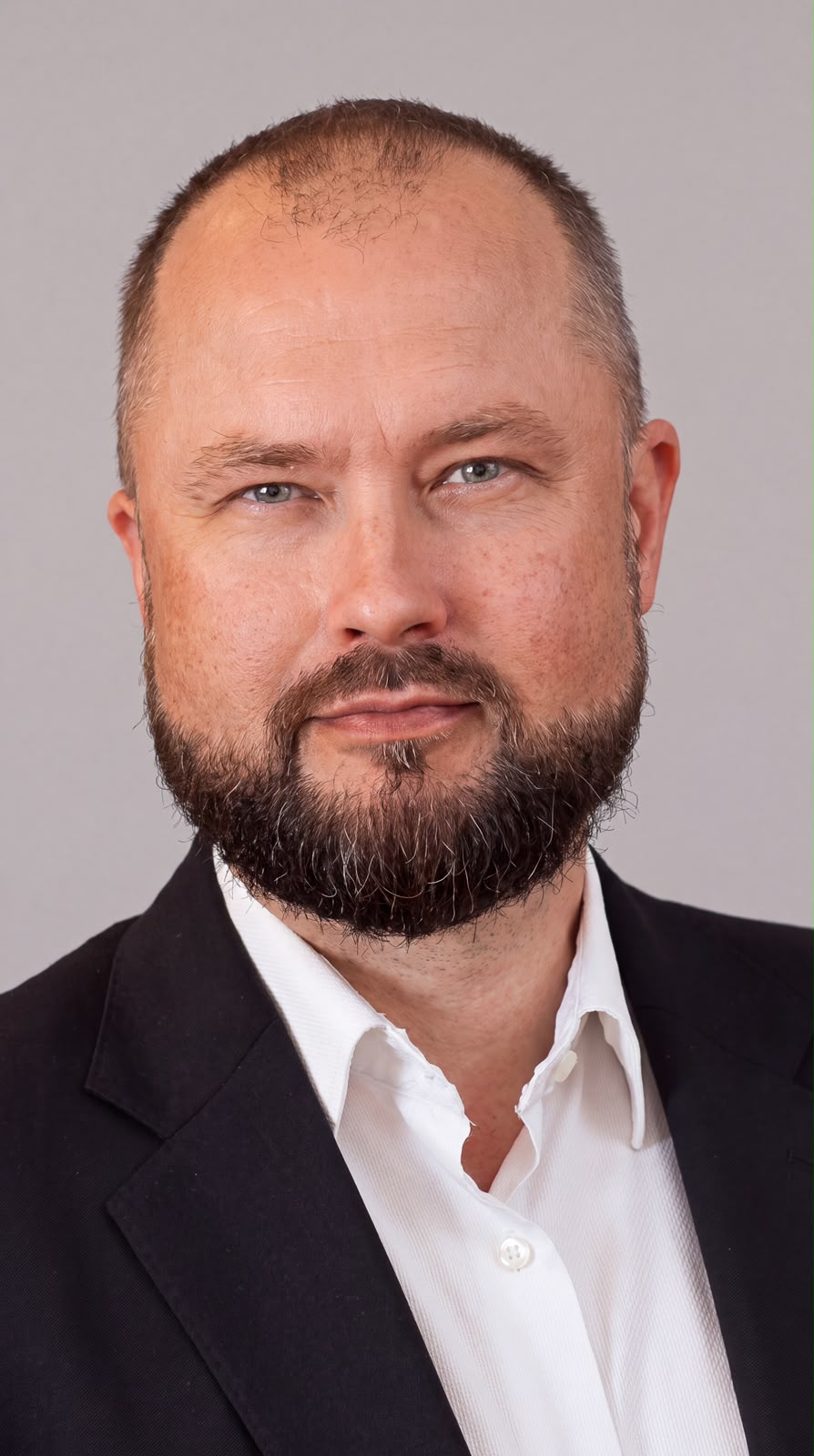
Who is Ermo Eero? He is the CEO of IronWallet, a non-custodial cryptocurrency wallet operated by INWAY AG in Liechtenstein since 2017. Eero brought traditional banking and compliance experience into a product born from a specific incident: a founding team member's crypto holdings were wiped out overnight in an exchange hack. The response was to build a product architecturally incapable of doing the same.
How IronWallet Is Built
IronWallet is non-custodial by design. Seed phrases remain on the user's device and are never transmitted to company servers, which means IronWallet itself cannot freeze, access, or recover a user's funds. The wallet requires no registration and no KYC verification, a position the company frames as fundamental to its privacy commitment. That design choice also puts Eero in a genuinely uncomfortable position as global regulation tightens, and he does not avoid the tension.
An Unusual Position on Regulation
Commenting on the US CLARITY Act, Eero argued that domestic legislation alone cannot set a global standard: "Important pivot for domestic capital, but not yet the Bretton Woods moment for crypto." It is an unusual statement from the CEO of a no-KYC wallet, advocating for greater international regulatory coordination rather than less, and pushing the industry to self-regulate rather than wait to be policed. Founders who build the most privacy-preserving version of a product while personally arguing for tighter global oversight are rare, mostly because the two instincts pull in opposite directions.
WalletConnect Pay and the Ingenico Network
In January 2026, IronWallet became a confirmed partner in the WalletConnect Pay rollout, live across more than 120 countries through the Ingenico payment terminal network. That is a compliance review from a global payments infrastructure company, not a self-reported milestone, and it matters precisely because it came from the outside. That tension between privacy-by-design and institutional validation is exactly why Eero's next moves, on product and on policy, are worth watching.
Common Questions About Web3 and Fintech Founders
Who is Alexander Guseff and what does Tectum do?
Alexander Guseff is the Founder and CEO of Tectum, a blockchain platform with a publicly tracked throughput of 3.5 million transactions per second. His flagship product SoftNote is a fee-less Bitcoin payment system for daily spending, using a passcode-based ownership transfer that moves value without creating a new on-chain transaction each time. He also founded CrispMind, Ltd., which owns Tectum and TectumKeys, a hardware encryption device designed to resist quantum brute-force attacks.
How did NIP Group move from esports into Bitcoin mining?
NIP Group, co-led by Hicham Chahine, entered Bitcoin mining in mid-2025 following its NASDAQ listing. The hash rate scaled from 3.11 EH/s in July 2025 to 11.3 EH/s by November, placing the company approximately 12th globally among publicly traded miners and first in MENA, a position verifiable through independent hash-rate tracking. The company operates from Abu Dhabi under a partnership with the Abu Dhabi Investment Office.
What is IronWallet and what makes Ermo Eero notable?
IronWallet is a non-custodial cryptocurrency wallet operated by INWAY AG in Liechtenstein since 2017. It keeps seed phrases on the user's device only, requires no KYC, and the company itself cannot access or freeze user funds. CEO Ermo Eero is notable for simultaneously building a privacy-first wallet and publicly advocating for stronger international regulatory coordination, an unusual combination. In January 2026, IronWallet became a WalletConnect Pay partner, live across 120-plus countries via the Ingenico payment terminal network.
This report is compiled by Quorum Media's research desk based on public filings, product release histories, and independent media coverage. Inclusion reflects a decision pattern the desk judged worth tracking, not an endorsement of any individual, company, product, or investment. Readers should conduct their own due diligence before acting on any information in this report. Additional installments will follow as the research desk identifies new founders meeting the criteria outlined above. Media inquiries and research requests can be directed to hello@quorum-media.com. Founders and executives seeking coverage in Web3 and fintech press can also learn more about our crypto PR services.